Badshahi Mosque Lahore: Timings, Dress Code, History & Photography Tips
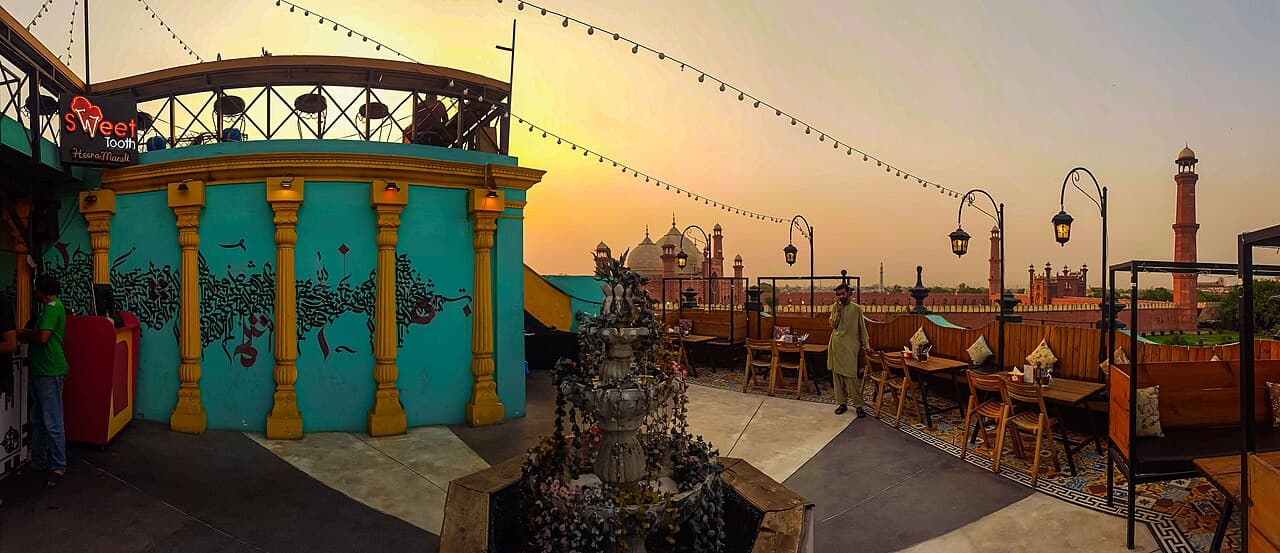
Built by Aurangzeb in 1673 and holding 100,000 worshippers in its courtyard — the complete visitor guide to Lahore's most iconic monument, with photography spots, Friday prayer logistics, and how to combine it with Lahore Fort.
The Badshahi Mosque is the reason Lahore appears in architecture textbooks. Built between 1671 and 1673 by the Mughal Emperor Aurangzeb, it was, for over three centuries, the largest mosque in the world — a title it held until the Faisal Mosque in Islamabad surpassed it in 1986. To stand in its courtyard today and understand what you are looking at is to understand something essential about the ambition of the Mughal Empire at its peak. This guide tells you everything you need to know to visit it properly.
History: What You Are Standing In
The Badshahi Mosque was commissioned by Emperor Aurangzeb and designed by his chief architect Fida'i Khan Koka (also written Fidai Khan), who had previously worked on the Red Fort in Delhi. Construction began in 1671 and was completed in 1673 — a remarkably fast timeline for a building of this scale, achieved by mobilising thousands of labourers and skilled craftsmen simultaneously.
Scale and Materials
The mosque is built primarily in red sandstone quarried from Rajasthan, the same material used in the Lahore Fort and the great mosques of Delhi. The three central domes are white Makrana marble — the same marble quarried for the Taj Mahal. The four minarets at the courtyard corners stand 176 feet (53.6 metres) tall. The courtyard accommodates 100,000 worshippers in the open air; the covered prayer hall adds space for another 10,000.
From Largest Mosque to Landmark
At completion in 1673, Badshahi Mosque was the largest mosque in the world. It held this distinction until 1986, when the Shah Faisal Mosque in Islamabad — a gift from the Saudi government — surpassed it in capacity. Since then, further record-holders have been built in Saudi Arabia and elsewhere. But the Badshahi remains, by most architectural assessments, the most beautiful large mosque ever constructed: the proportions are more refined than later record-holders, the materials are richer, and the setting — flanked by Lahore Fort on one side and the Sikh Samadhi of Ranjit Singh on the other — gives it a historical weight that newer buildings cannot replicate.
Post-Mughal History
The mosque's post-Mughal history is complicated. Under Sikh rule (1799–1849), it was briefly used as stabling for horses and a military garrison — a fact that causes some distress in accounts of Lahore's Muslim heritage, though the Sikhs eventually restored its religious use. The British colonial government further repaired the structure after 1849. Major restoration work was completed in the 1960s under the Pakistan government, and ongoing conservation continues under the Auqaf Department and UNESCO-supported initiatives.
Visiting Hours and Entry
The Badshahi Mosque is open to visitors daily from 6:00 am to 10:00 pm. There is no entry fee for anyone — Muslim or non-Muslim. The mosque functions as an active place of worship and the gates are accessible to all visitors throughout the day.
Prayer Times
Five daily prayers take place at standard times (which shift with the season). During prayer times, the covered prayer hall is in active use; visitors are welcome in the courtyard but are asked not to walk through the prayer rows. The Muezzin's call from the 176-foot minarets — a 1673 acoustic design that projects the adhaan across the Walled City — is one of Lahore's defining audio experiences. If you are visiting and the call begins, stop and listen.
Friday Juma Namaz: How to Attend
Friday Juma prayer takes place between approximately 12:30 and 2:00 pm (exact time shifts seasonally with dhur prayer time). On Fridays, the mosque fills beyond capacity — the courtyard, the covered hall, and the forecourt of Hazuri Bagh all fill with worshippers who arrive from 11:30 am onward.
Non-Muslim visitors are welcome to observe from the upper gallery (mezzanine level accessible from the main entrance staircase). The gallery overlooks the prayer hall and provides a direct view of the 100,000-person courtyard in full use — one of the most visually overwhelming collective human experiences available anywhere in Pakistan. If you are visiting on a Friday, plan around this: arrive before noon to secure a gallery position, or return after 2:15 pm when the main prayer concludes and the mosque reverts to normal visitor access.
Dress Code: What to Wear
The dress code is enforced at the main gate and is consistent regardless of faith:
- Men: Long trousers required. Shorts are not permitted. A collared shirt or shalwar kameez. Arms may be bare.
- Women: Full-coverage clothing — arms, legs, and hair covered. Abayas and dupattas are provided free of charge at the gate for women who arrive without head covering; the gate attendants will hand these to you without charge or commentary. You may bring your own if preferred.
- Shoes: All visitors remove shoes before entering the prayer hall. Shoe storage racks are at the hall entrance. Carry a bag for your shoes; the racks are not individually locked.
- Socks: Recommended — the marble and sandstone floors are cold in winter and hot in summer.
Photography: What Is Allowed and Where to Stand
Photography is permitted throughout the mosque complex — courtyard, exterior facades, minarets, and the prayer hall interior. The only restriction is common courtesy during active prayer: do not photograph worshippers in prayer without permission, and do not use flash during the prayer hall portions of Juma.
Best Photography Positions
1. West Gate Minaret from Hazuri Bagh: The classic full-facade shot of the mosque is taken from Hazuri Bagh — the formal garden between the mosque and Lahore Fort. Position yourself at the western end of Hazuri Bagh facing east; the mosque's main gate and twin minarets frame perfectly from here. Best light: late afternoon (4–6 pm in summer, 3–5 pm in winter) when the sun is behind you and on the sandstone facade. This is the image you have seen in every article about Lahore.
2. Interior Prayer Hall Arches: The covered prayer hall interior features a sequence of arched bays with white marble piers. The receding arch composition — looking from the entrance toward the mihrab (prayer niche) — is the best interior shot. Use a wide-angle lens; the space is wider than any standard lens captures in one frame. Flash off; the ambient light from the courtyard is sufficient and more beautiful.
3. Fountain at Dusk: The central courtyard fountain, when operating, reflects the dome above at dusk. The 20-minute window after sunset when the sky is still blue and the mosque lighting has come on — roughly 7:30–7:50 pm in summer, earlier in winter — produces the strongest contrast between the illuminated white marble domes and the deep blue sky. This is the money shot for colour photographers.
4. Minaret Summit (Access Occasionally Available): On some weekday mornings, the minaret staircases are accessible to visitors with a request at the gate. The view from 176 feet encompasses the Walled City, the Fort, Hazuri Bagh, and on clear days, the canal road and the distant hills of the Salt Range. This is not always available; ask politely.
Combining Badshahi Mosque with Lahore Fort
The mosque and the Fort share a forecourt — they are 100 metres apart, separated by Hazuri Bagh. A combined morning visit is the standard plan and makes logical sense:
- Arrive at the mosque by 8:30 am — the courtyard is quiet, the light is soft, and the morning worshippers have finished Fajr prayer.
- Spend 45–60 minutes at the mosque: courtyard, prayer hall (if not prayer time), and Hazuri Bagh exterior photos.
- Walk to Lahore Fort's Alamgiri Gate (5-minute walk, fort opens 8:30 am, entry PKR 60 Pakistanis / PKR 500 foreigners).
- Spend 2–3 hours in the Fort (Sheesh Mahal, Naulakha, Diwan-e-Aam — see the Fort guide for details).
- Return to Badshahi for Dhuhr prayer (optional) and the Fort Road food street for lunch.
Roshnai Gate Food Street: Evening Option
The food stalls clustered around Roshnai Gate — the Walled City gate immediately adjacent to the mosque's western entrance — operate from approximately 6 pm and run late. The dhabas here are modest in menu but reliable in karahi and naan: PKR 800–1,500 for two. The setting — eating in the shadow of the mosque's illuminated minarets — is one of Lahore's best evening experiences and is completely free of charge beyond the cost of the food.
Parking
The designated parking area is the Hazuri Bagh lot on the mosque's western side, accessible from the road running between the mosque and the Fort. The listed car-parking price was PKR 100 when this guide was prepared; confirm it on arrival. The lot fills quickly on Fridays and during festivals, so arrive early or use a currently operating ride-hailing service (drop-off point: Hazuri Bagh roundabout).
Quick Reference
- Open: Daily, 6:00 am – 10:00 pm
- Entry fee: Free (all visitors, all faiths)
- Dress code: Modest; abayas/dupattas free at gate for women
- Friday Juma: 12:30–2:00 pm; gallery viewing for non-Muslims
- Parking: Hazuri Bagh lot, PKR 100
- Best photo time: Dusk (fountain + illuminated domes) or 8:30–9:30 am (soft light, quiet)
- Combined visit: Lahore Fort is 100m away, same parking lot
Story
Heritage
Reading time
8 min
Legacy editorial
First published 8 June 2025
Verify changing facts and prices independently.
More scenes from the destination
General destination planning
Check current details before you go
These official links are general planning resources, not evidence for this article. Opening hours, fares, prices, access rules and businesses can change, so confirm details independently for your dates.
About the Author
Taqi Naqvi
AI entrepreneur and the founder of Top 10 Lahore. Building AI-powered content and research tools across South Asia.
Connect on LinkedIn