Lahore Fort (Shahi Qila): Timings, Entry Fee, Map & Hidden Gems Inside
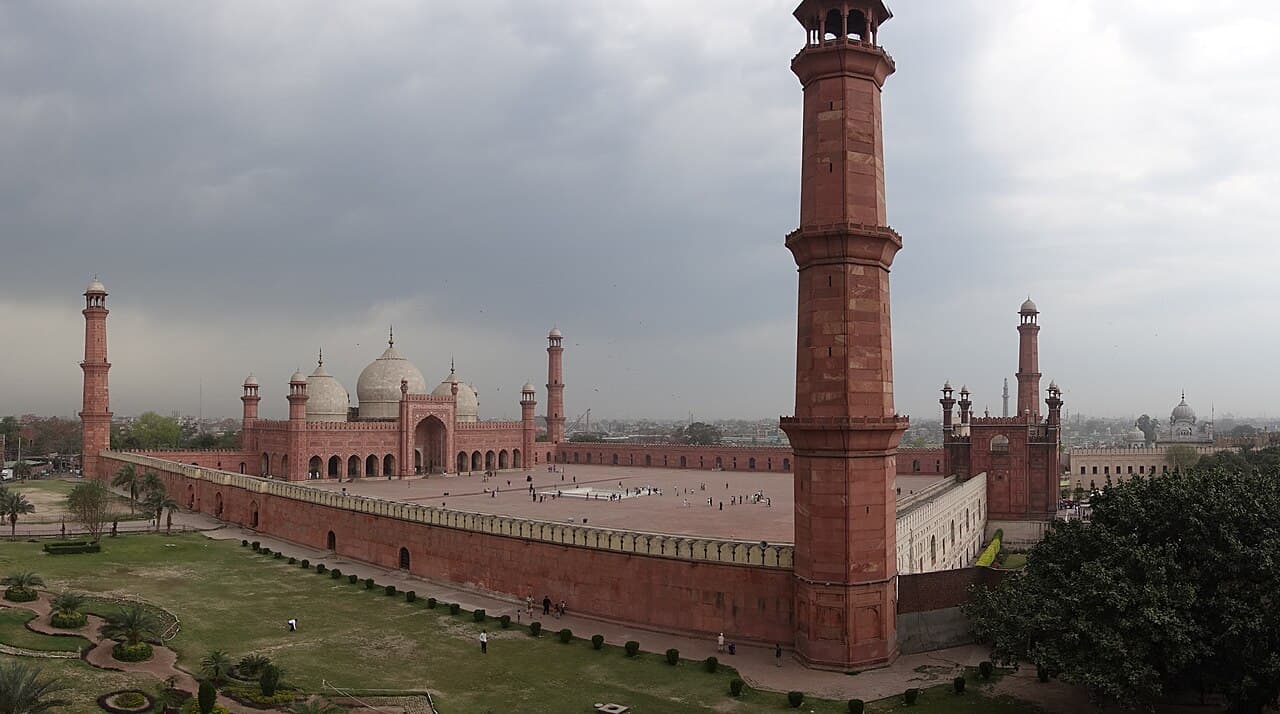
PKR 60 entry fee, 2–3 hours minimum, 21 monuments across 4 centuries of Mughal construction — the definitive visitor guide to Lahore Fort including the Sheesh Mahal mirror palace, Naulakha Pavilion, and the hidden gems most visitors miss.
Lahore Fort — Shahi Qila, the Royal Citadel — is not a single building. It is twenty-one buildings, arranged across a raised plateau of approximately 20 hectares, constructed and added to across nearly five centuries of continuous Mughal and post-Mughal use. The oldest structures date to Akbar's reign in the 1560s; the most recent Mughal additions were made by Aurangzeb in the 1670s. Between them, Shah Jahan's architects produced the Sheesh Mahal, which contains more mirrors than any room ever built before or since. This guide takes you through the Fort in the order that makes chronological and spatial sense, with the highlights ranked honestly and the hidden gems flagged clearly.
Practical Information
Entry and Opening Hours
- Pakistanis: PKR 60 per adult, PKR 20 children
- Foreign nationals: PKR 500 per adult
- SAARC nationals: PKR 200
- Opens: 8:30 am daily
- Last entry: 4:30 pm
- Closes: 5:00 pm
- Friday: Morning only — the Fort closes from approximately 12:00 pm to 2:30 pm for Juma prayer; plan your visit before 11:30 am or arrive after 2:45 pm
Audio Guide
An audio guide in English is available at the entrance for PKR 200. The guide covers the 12 main monuments with commentary of approximately 3–5 minutes per stop. The content is accurate and contextualises the buildings within Mughal history. Recommended for first-time visitors; experienced architecture walkers may find it too slow.
Getting There and Parking
The Fort's main entrance (Alamgiri Gate) is accessible from the road running alongside Hazuri Bagh, between the Fort and Badshahi Mosque. Parking: The Hazuri Bagh lot serves both the Fort and the mosque; confirm the current fee on arrival. On weekends and public holidays, arrive before 9 am for the best chance of parking. Ride-hailing drop-off: Hazuri Bagh Roundabout — a short walk to the Alamgiri Gate.
Time Required
Minimum visit: 2 hours (Alamgiri Gate, Diwan-e-Aam, Sheesh Mahal, Naulakha). Complete visit: 3–4 hours (all 12 main monuments plus the museum). Children and casual visitors: 1.5–2 hours is sufficient for the highlights.
The Fort's History: Four Emperors, Four Centuries
The site of Lahore Fort has been fortified since at least the 11th century, but the standing structures begin with Akbar the Great (r. 1556–1605), who replaced earlier mud-brick structures with fired brick and began the systematic construction of a palace complex in the 1560s. Akbar's contribution is primarily structural — the basic footprint, the outer walls, the earliest surviving palace buildings.
Jahangir (r. 1605–1627)
Jahangir added the Quadrangle that bears his name — a large courtyard palace with painted and tiled interiors — and the Kala Burj (Black Tower), whose frescoed chambers are among the Fort's most intimate spaces. Jahangir was an aesthete who cared more about painting and gardens than military architecture; his additions to the Fort reflect this preference.
Shah Jahan (r. 1628–1658)
Shah Jahan is responsible for the Fort's two most extraordinary structures: the Sheesh Mahal (1631–32) and the Naulakha Pavilion. Both represent the peak of Mughal decorative art — the Sheesh Mahal in mirror mosaic, the Naulakha in pietra dura stonework. Shah Jahan also added the Moti Masjid (Pearl Mosque), a white marble prayer hall used exclusively by the imperial family.
Aurangzeb (r. 1658–1707)
Aurangzeb's primary addition is the Alamgiri Gate (1673) — the Fort's main entrance and one of the most imposing gateways in the subcontinent. Aurangzeb also constructed the Badshahi Mosque on the opposite side of Hazuri Bagh during the same period; together, the two projects represent the last great Mughal building campaign in Lahore.
Walking the Fort: The Recommended Route
1. Alamgiri Gate — Start Here
Built by Aurangzeb in 1673, the Alamgiri Gate is the Fort's main public entrance and its most dramatic facade. Two massive octagonal towers flank a high central arch; the towers are topped with white marble chhatri (kiosk) domes in the Mughal style. The gate faces west, toward Hazuri Bagh and the Badshahi Mosque — a spatial relationship that was intentional: both buildings were completed simultaneously, and the axis between them was designed as a processional route for state occasions.
2. Diwan-e-Aam (Hall of Public Audience)
Walking through the Alamgiri Gate and into the Fort's interior, you enter the Diwan-e-Aam courtyard — the public audience hall where the Mughal emperor held court for ordinary petitioners. The hall is a colonnaded space in the classic Mughal arcade style, with 40 arched bays arranged around a central open space. The marble jharokha (projecting balcony) at the far end is where the emperor sat — elevated above the courtyard floor, visible to all petitioners below, the physical expression of Mughal hierarchical power. The Diwan-e-Aam at Lahore Fort is less famous than its equivalent in Delhi's Red Fort, but structurally similar and considerably less crowded.
3. Sheesh Mahal — The Fort's Crown Jewel
The Sheesh Mahal (Mirror Palace), completed by Shah Jahan in 1631–32, is the single most extraordinary room in Pakistan. Every surface — the ceiling, the arched niches, the walls, the columns — is covered in convex mirror fragments set in a plaster matrix, in geometric and floral patterns of extreme intricacy. Contemporary accounts record that over 1,000 craftsmen worked on the mirrored interior over several years; the number of individual mirror pieces has never been precisely counted, but the effect of the whole is unmistakable: strike a match in this room and it becomes a galaxy.
Photography tip: Turn off your flash. The mirrors catch and multiply any light source dramatically — including the ambient light from the courtyard — and natural light produces the most accurate image of how the room actually reads. With flash, the image is a chaos of reflections; without flash, the pattern becomes legible.
How to get there: From Diwan-e-Aam, follow the path north toward the river wall; the Sheesh Mahal is in the Quadrangle of Shah Jahan, marked on the Fort map given at the entrance.
4. Naulakha Pavilion
Twenty metres from the Sheesh Mahal, the Naulakha Pavilion is a small, single-domed white marble kiosk that cost the Mughal treasury nine lakh (900,000) rupees — hence the name, naulakha meaning "worth nine lakhs." The cost went into the pietra dura decoration: flowers, birds, geometric arabesques, and borders cut from lapis lazuli, onyx, carnelian, jasper, and malachite, and inlaid into the marble surface with a precision that requires a magnifying glass to appreciate fully. The technique is identical to that used on the Taj Mahal (completed 1653) and is a product of the same royal workshops. The pavilion is small enough to examine closely; take your time at the wall panels.
5. Moti Masjid (Pearl Mosque)
Shah Jahan's small imperial mosque — built for the private use of the royal family and their immediate court — is a white marble structure with three domes of characteristically Shahjahanabad refinement. The scale is intimate compared to the Badshahi Mosque; the material quality is, if anything, higher. The interior marble inlay work and the calligraphy borders are in excellent condition following recent conservation. Remove shoes at the threshold; visitors are welcome.
6. Jahangir's Quadrangle
The large central courtyard of the Fort was originally designed under Akbar and expanded by Jahangir. The courtyard's four facades are decorated in kashi kari tilework in the blue-and-white Lahori tradition — a different aesthetic register from Shah Jahan's marble interiors, more geometric, more colour-saturated. The northwest corner of the Quadrangle contains the Kala Burj (Black Tower) — two frescoed chambers whose painted decoration (hunting scenes, floral borders, and portrait medallions in the Safavid-influenced style favoured by Jahangir) is the finest secular fresco surviving in the Fort.
Hidden Gems Most Visitors Miss
Hathi Pol (Elephant Gate)
On the Fort's northern edge, the Hathi Pol — the Elephant Gate, used for the entry of the imperial elephants — is a Akbar-period structure that most visitors walking the standard south-to-north route either miss entirely or pass without stopping. The gate's scale is designed for its original users: the archway is 5 metres wide and 6 metres high, sized for an elephant carrying a howdah (rider's platform). The contrast between this functional scale and the ornamental delicacy of the nearby Shah Jahan structures is a useful reminder of the full range of activity the Fort was designed to accommodate.
Hazuri Bagh Baradari — Between the Fort and Mosque
The Hazuri Bagh Baradari — literally, the audience hall in the thousand-flowered garden — is the white marble pavilion sitting in the centre of the garden between the Fort's Alamgiri Gate and the Badshahi Mosque's main entrance. Built by the Sikh ruler Maharaja Ranjit Singh in 1818 using marble repurposed from Mughal buildings, it was his ceremonial reception hall in the Lahore capital. Most visitors walk past it without stopping; it repays close examination. The marble carving — done by craftsmen trained in the Mughal tradition under Sikh patronage — is of genuine quality, and the pavilion's siting at the exact midpoint between the Fort and the Mosque makes it the spatial and historical hinge of the whole Hazuri Bagh complex.
There is no entry fee for the Baradari; it sits in the public Hazuri Bagh garden and is accessible whenever the garden is open.
The Fort Museum
Inside the Fort, the Mughal-period Diwan-e-Khas building houses a museum with original Mughal artefacts: arms and armour from the Mughal court, miniature paintings, jade vessels, coins, and calligraphy panels. The collection is not large but includes several objects of genuine rarity. Admission is included with Fort entry. The museum is often skipped by visitors; it should not be.
The Fort and Badshahi Mosque: Combined Visit Plan
The standard combined visit — the most efficient way to experience both monuments:
- 8:30 am: Arrive at Hazuri Bagh parking lot (PKR 100). Enter the Fort through Alamgiri Gate.
- 8:30–11:30 am: Fort visit — Diwan-e-Aam, Sheesh Mahal, Naulakha, Moti Masjid, Jahangir's Quadrangle, Hathi Pol, Museum.
- 11:30 am: Exit Fort, cross Hazuri Bagh, enter Badshahi Mosque.
- 11:30 am–12:30 pm: Mosque courtyard and prayer hall (before Juma crowds arrive).
- 12:30 pm: Observe Juma prayer from the gallery, or exit to Fort Road food street for lunch.
- 2:30 pm (optional): Return to the Mosque after Juma concludes for photography in the afternoon light.
Quick Reference
- Entry: Pakistanis PKR 60 / Foreigners PKR 500
- Hours: 8:30 am – 5:00 pm (last entry 4:30 pm); Friday morning only 8:30 am – 12 pm
- Audio guide: PKR 200, English available
- Time needed: 2–3 hours minimum
- Parking: Hazuri Bagh lot, PKR 100
- Don't miss: Sheesh Mahal (flash off), Naulakha pietra dura, Hazuri Bagh Baradari (free, outside)
- Combine with: Badshahi Mosque (100m away, free), Fort Road Food Street (10 min walk, lunch)
Story
Heritage
Reading time
8 min
Legacy editorial
First published 20 June 2025
Verify changing facts and prices independently.
More scenes from the destination
General destination planning
Check current details before you go
These official links are general planning resources, not evidence for this article. Opening hours, fares, prices, access rules and businesses can change, so confirm details independently for your dates.
About the Author
Taqi Naqvi
AI entrepreneur and the founder of Top 10 Lahore. Building AI-powered content and research tools across South Asia.
Connect on LinkedIn