Day Trips from Lahore: 5 Places Within 3 Hours
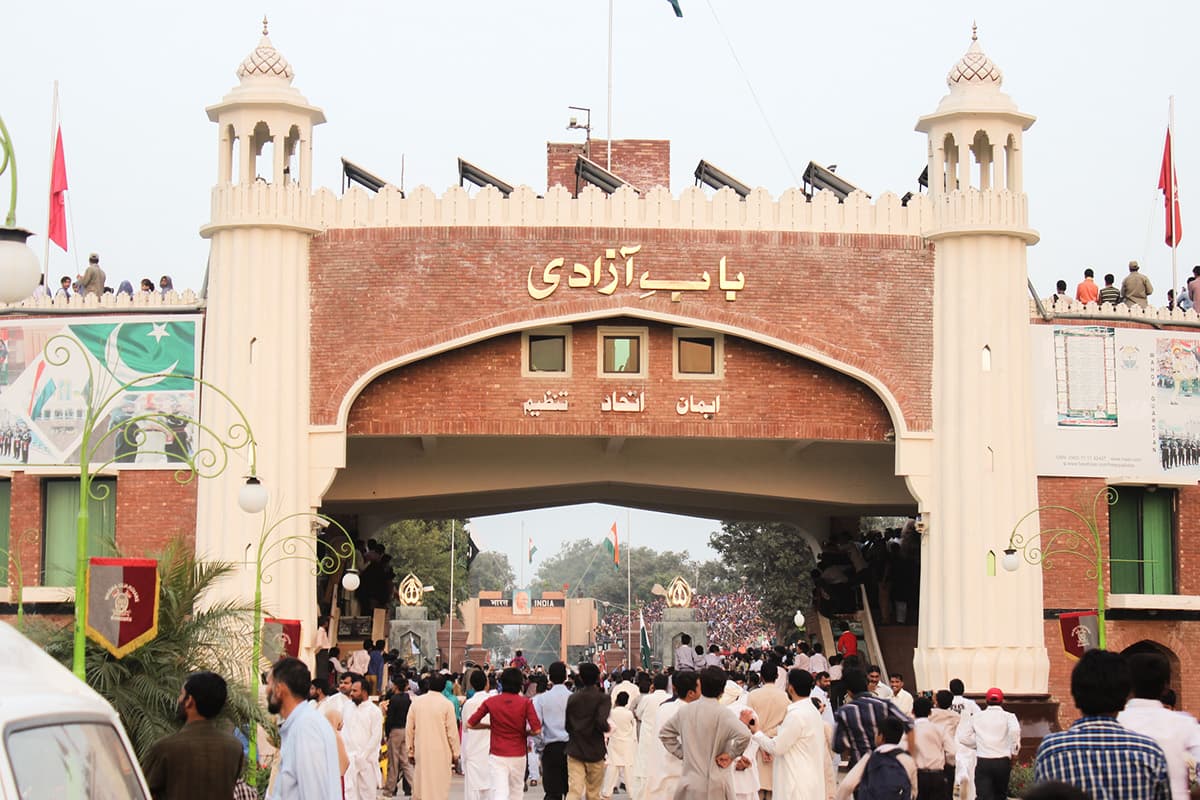
Indus Valley ruins at Harappa, the Sikh holy city of Nankana Sahib, riverside picnics at Head Balloki, the forests of Changa Manga, and the twin monuments of Sheikhupura — all within a half-day's drive.
Lahore is absorbing enough to fill a week without leaving the city limits. But the Punjab that surrounds it repays exploration, and the five destinations in this guide are each, in their own way, essential extensions of the Lahore story — archaeological, spiritual, ecological, and architectural. None requires an overnight stay. All are drivable in a day. None are tourist traps. Most are undervisited relative to their significance.
1. Harappa — 3 Hours from Lahore
Distance: approximately 235 km via the Sahiwal road. Drive time: 2.5–3 hours each way.
Harappa is one of the two defining sites of the Indus Valley Civilisation — the urban culture that flourished across the Indus basin from approximately 2600 to 1900 BCE and whose sophistication (planned street grids, covered drainage systems, standardised weights and measures, a script still undeciphered) challenges easy narratives about where civilisation began. The site at Harappa covers over 150 hectares and includes the excavated remains of a walled citadel, granary, workers' quarters, and craft production areas. The on-site museum contains original Harappan artefacts — terracotta figurines, stamp seals with the undeciphered script, copper tools, and the famous Harappan weights — that put the excavated landscape into context.
The honest caveat: Harappa is not visually spectacular. Unlike the Mughals, who built in dressed stone and covered their surfaces with tile, the Harappans built in kiln-fired brick and their city survives mostly as brick stubs and earthworks. What it requires is historical imagination — the ability to look at a three-metre-wide paved street and understand that it was once part of a city of 40,000 people who were contemporaries of the Egyptian Old Kingdom. If you can make that imaginative leap, Harappa is one of the most affecting places in Pakistan. Entry: Rs 200 adults. Museum hours: 9 am – 5 pm, closed Friday.
2. Nankana Sahib — 2 Hours from Lahore
Distance: approximately 75 km via the Sheikhupura road. Drive time: 1.5–2 hours each way.
Nankana Sahib is one of the holiest cities in Sikhism — the birthplace of Guru Nanak Dev Ji, the founder of the Sikh faith, born here in 1469. For Sikhs from India, Pakistan, and the diaspora, Nankana Sahib is a site of pilgrimage of the first order; for non-Sikh visitors, it offers something rarer: an opportunity to experience a functioning religious site of another faith with the kind of hospitality that Pakistani Punjab's Sikh pilgrimage infrastructure has developed over decades of international visitors.
The principal gurdwara, Gurdwara Janam Asthan (birthplace shrine), is a large, white-marble complex with a central sarovar (sacred pool), gilded domes, and the calm architectural vocabulary of the Sikh sacred tradition. The langar (community kitchen) serves free meals to all visitors regardless of faith — a practice central to Sikh theology and genuinely moving in execution: hundreds of people eating together at long tables, served by volunteers, in complete silence broken only by kirtan (devotional music) from the prayer hall. Visit on a weekday for a quieter experience; major Sikh festivals bring thousands of pilgrims and require early arrival. Free entry. Dress modestly; head covering required inside the gurdwara.
3. Head Balloki — 1.5 Hours from Lahore
Distance: approximately 95 km via the GT Road / Raiwind Road corridor. Drive time: 1–1.5 hours each way.
Head Balloki is a barrage on the Ravi River, one of a series of British-engineered irrigation headworks that made the Punjab's agricultural transformation possible in the early 20th century. It is not conventionally a tourist site, which is precisely why it is worth visiting. The barrage itself — a long, low concrete structure with manually operated sluice gates — is genuinely interesting as an engineering object, but the reason Lahoris come here is the river environment: the Ravi's banks at Balloki are lined with kikar and eucalyptus trees, the water runs fast over the barrage lip, and the whole area has an untouched, riverside-picnic quality that is increasingly hard to find near Lahore.
Local families set up here on weekends with portable stoves and food carriers; fishermen work the downstream pools; and the sound of the barrage's water is, after the city's traffic, extraordinarily peaceful. Pack food and bring a mat. There are no restaurants of note nearby. The drive along the canal roads from Raiwind through to Balloki passes through some of the most productive agricultural land in Pakistan — wheat fields, sugar cane, and orchards — which is its own kind of Punjab education. Free access. No formal facilities.
4. Changa Manga — 1.5 Hours from Lahore
Distance: approximately 80 km south via the Kasur road. Drive time: 1–1.5 hours each way.
Changa Manga is one of the world's largest man-made forests — a plantation of over 12,500 acres originally established by the British in 1866 to supply railway fuel timber for the Punjab railway network. The British planted fast-growing shisham (Indian rosewood) and eucalyptus systematically across what was then agricultural wasteland, and the result, a century and a half later, is a genuine forest: closed canopy, dappled light, birdsong, and the specific smell of shaded woodland soil that Punjab's flat agricultural landscape almost never otherwise provides.
A narrow-gauge railway loops through part of the forest, and the Wildlife Department manages a small zoo and boating lake. The forest is the draw, however — walking or cycling through shisham canopy on a cool morning, when the light comes through the branches in the way that no park in any city can replicate, is a specific pleasure that Lahori families understand. Changa Manga is a day-trip institution: generations have come here for school trips, family picnics, and pre-wedding retreats. The infrastructure is modest (basic food stalls, simple rest areas) but the forest itself requires no infrastructure. Entry: Rs 80 adults. Toy train: Rs 100. Boating: Rs 200/30 minutes. Timings: 8 am – 6 pm.
5. Sheikhupura Fort and Hiran Minar — 1 Hour from Lahore
Distance: approximately 40 km northwest on the Sheikhupura road. Drive time: 45 minutes to 1 hour each way.
Sheikhupura district offers two Mughal monuments that are, taken together, among the most underrated day trips in Punjab. Hiran Minar (Tower of the Deer) is a unique monument commissioned by Emperor Jahangir in 1606 as a memorial to his pet antelope, Mansraj, who is said to have been his hunting companion for seventeen years. The monument consists of a tall octagonal minaret rising from a large artificial reservoir, connected by a causeway to a central platform. The visual logic — a slender tower reflected in still water, the platform accessed by boat or causeway, the whole composition deliberately theatrical — is unlike any other Mughal monument in Pakistan. It is a garden monument in the Persian tradition, built for beauty and sentiment rather than worship or governance.
Sheikhupura Fort, a few kilometres away, was built by Jahangir as a hunting lodge and is one of the best-preserved small Mughal forts in Punjab. Its wall paintings — hunting scenes in the Mughal miniature tradition, painted directly on plaster — were restored by the Aga Khan Trust and represent the finest surviving example of Mughal secular fresco in Pakistan. The fort's rooftop offers views across the surrounding agricultural plain that explain why Jahangir chose this location: clear sightlines in every direction, game-rich wetlands to the west, Lahore visible on the horizon to the southeast. Hiran Minar entry: Rs 100. Sheikhupura Fort entry: Rs 100. Both open 9 am – 5 pm daily.
Practical Planning Notes
For all five trips, a private car or hired vehicle is strongly recommended — local transport exists but adds significant time and complexity to journeys that are already most of a day. The Sheikhupura + Hiran Minar combination is easily done in a half day, leaving a Lahore afternoon free. Changa Manga pairs well with a morning drive through the Kasur district's historic old town (Kasur is the birthplace of the poet Bulleh Shah and has a modest but genuine cultural site at his shrine). Nankana Sahib and Sheikhupura Fort can be combined in a single day — they are roughly in the same direction from Lahore, separated by about 30 km. Harappa is the only trip that genuinely requires a full day; leave Lahore by 7 am to arrive with enough time at the site and museum before returning in the early evening.
Story
Travel
Reading time
7 min
Legacy editorial
First published 12 May 2025
Verify changing facts and prices independently.
More scenes from the destination
General destination planning
Check current details before you go
These official links are general planning resources, not evidence for this article. Opening hours, fares, prices, access rules and businesses can change, so confirm details independently for your dates.
About the Author
Taqi Naqvi
AI entrepreneur and the founder of Top 10 Lahore. Building AI-powered content and research tools across South Asia.
Connect on LinkedIn