Connect this guide with the rest of your visit in the Lahore trip planner. Read how the research is made and what its sources establish.
At a glance
Start here
- Start at a named threshold and track one product family instead of wandering without a question.
- Materials reveal trade relationships: cloth, metal, herbs, packaging and jewellery occupy linked streets.
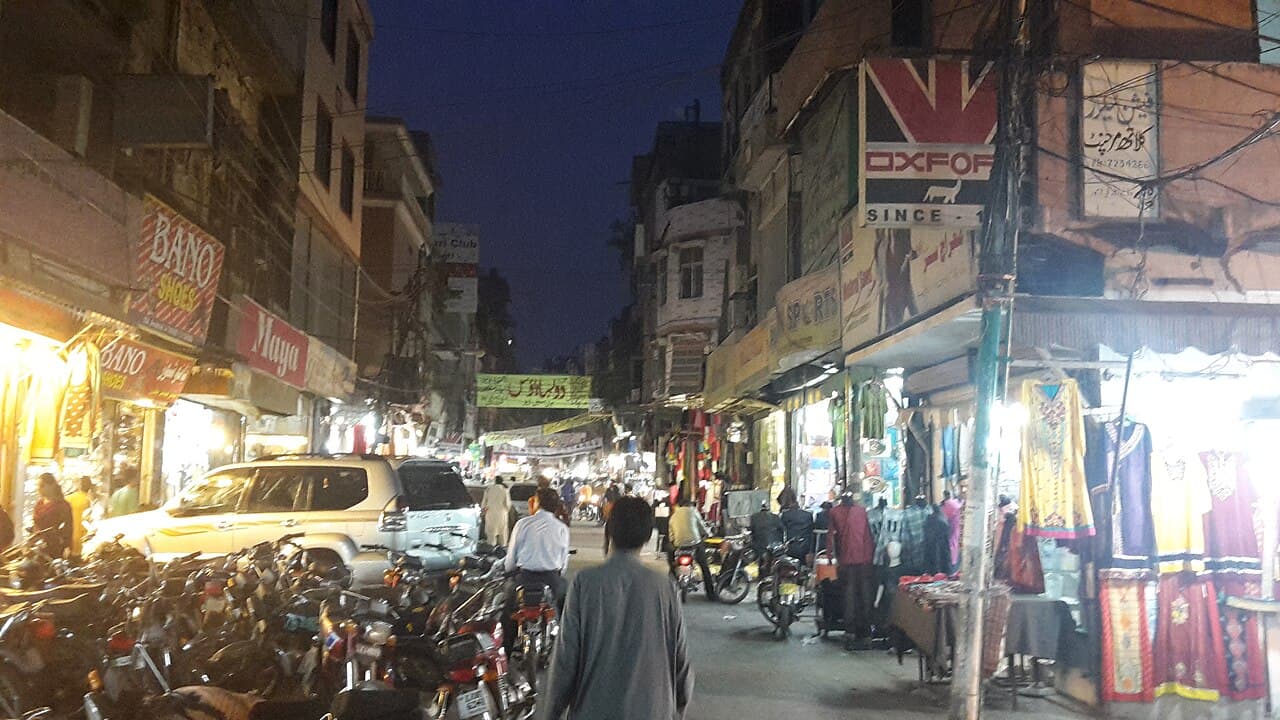
- Changes in street width, shade, loading and sound help distinguish wholesale from retail space.
- Observe working commerce without blocking transactions or treating people as scenery.
01
Begin where the street changes character
A gate marks more than an entrance. Delhi Gate historically aligned with the route toward Delhi and leads into a bazaar street; Kashmiri Gate became associated with a major commercial centre; Shah Almi survives as the name of a wholesale district even though the gate structure is gone. At each threshold, look for a change in width, building height, traffic mix, signage or the proportion of stored goods to display goods.
Do not search for ancient purity. WCLA records British-period rebuilding at several surviving gates and post-Partition commercial expansion near Kashmiri Gate. A bazaar's historical value includes rebuilding and intensification, not just remnants that look old.
Sources: Walled City of Lahore Authority; Walled City of Lahore Authority02
Follow connections, not a straight line
WCLA describes the Walled City's markets as a network: Kashmiri Bazaar can lead toward Kasera Bazaar, Sarafa, Rang Mahal and Shah Almi. This matters because a turn may represent a trade relationship rather than a navigational error. The bazaar is closer to a web of specialised rooms than a single retail avenue.
Choose one connection and stop after it becomes legible. For example, move conceptually from cloth to wedding trim, or from metal vessels to decorative objects. Save a pin at the starting threshold and another at the intended exit, but expect the most informative evidence to appear between them.
Sources: Walled City of Lahore Authority03
Cloth shows the difference between scale and spectacle
The authority locates Azam Cloth Market inside Delhi Gate and describes it as an extensive wholesale network selling fabrics from khaddar to silk and bridal materials. Pakistan Cloth Market operates alongside it with a retail emphasis. The useful comparison is not which is better; it is how wholesale and retail present the same material differently.
Look for wrapped bales versus unfolded samples, repeated codes versus descriptive signs, loading activity versus browsing, and narrow aisles designed around stock movement. Colour is the first sensory impression, but packaging and handling explain the commercial system behind it. Do not count shops or repeat superlatives unless current authoritative data supports them.
Sources: Walled City of Lahore Authority04
Metal turns sound into evidence
Kasera Bazaar near Rang Mahal specialises in household utensils and crockery, including iron, steel, brass and copper objects, according to WCLA. The authority's Lohari route also names a gemstone market and metalwork at Chowk Jhanda. The mixture of stacked vessels, hanging lamps and hard surfaces can create a distinct acoustic field. Instead of writing that a market is simply noisy, identify what produces each sound: tapping, stacking, shutters, delivery carts or conversation across a narrow passage.
Material also changes light. Polished and aged surfaces reflect differently under awnings; repeated circular vessels create patterns that shop architecture did not design. Sensory description becomes useful when tied to objects, work and street geometry rather than used as exotic atmosphere.
Sources: Walled City of Lahore Authority; Walled City of Lahore Authority05
Smell can map product families
Akbari Mandi is identified with grains, spices, herbs and chemicals, while Pappar Mandi between Shah Alam and Lohari Gates is associated with herbs, perfumes, preserves and plastic bottles. A change in smell may therefore signal a change in product cluster or processing stage, but it is not proof by itself. Confirm with signs, packaging and the goods actually visible.
This is also a lesson in supply chains. Bottles beside perfume and preserve sellers point to packaging as part of the market ecosystem; sacks and weighing tools point to bulk distribution. Read what supports the headline product rather than recording aroma as a detached travel impression.
Sources: Walled City of Lahore Authority; Walled City of Lahore Authority07
Write a market note that is not filler
Use four sentences. First name the threshold and product family. Second identify one material fact. Third explain a movement or support system such as loading, wrapping, weighing or display. Fourth record uncertainty: the street name you could not verify, the workshop you did not enter, or the schedule you did not assume.
This discipline resists the usual language of chaotic colour and timeless tradition. Lahore's bazaars are organised, changing workplaces. The visitor's responsibility is to notice their systems without slowing them down. If the street is too congested to stand, keep moving; close observation never creates a right to obstruct commerce.
- Name a product, not merely a colour.
- Name a task, not merely a sound.
- Name a connection, not merely a maze.
- Name what remains uncertain.
Useful answers
Reader questions
Are Old Lahore's bazaars separate markets?
They have named specialisations, but WCLA describes them as interconnected. A route can pass from Kashmiri Bazaar toward Kasera, Sarafa, Rang Mahal and Shah Almi, so relationships among markets are as important as boundaries.
Sources: Walled City of Lahore AuthorityWhat is the difference between Azam and Pakistan Cloth Market?
The authority presents Azam Cloth Market as a wholesale cloth network and Pakistan Cloth Market alongside it as more retail-focused. Observe packaging, stock movement and display rather than assuming one suits every buyer.
Sources: Walled City of Lahore AuthorityDo all gate districts still have a physical gate?
No. WCLA records several lost gate structures, including Shah Almi and Akbari, while the names continue to organise commercial areas. Treat those as district histories, not failed monument searches.
Sources: Walled City of Lahore AuthorityIs this a bargaining guide?
No. It offers a way to read products, movement and urban form. Prices and trading practices vary, and the official pages used here do not establish a universal bargaining rule.
Sources:Read the evidence
Sources and further reading
These sources support the relevant sections above. Plans and comparisons are editorial suggestions. Check operators for current arrangements.
- Lahore's Bazaars: A Cultural Shopping Experience ↗Walled City of Lahore Authority · Research date 14 September 2026
The connected market network and the products and locations of named bazaars.
- Historic Gates of Lahore: Explore the Walled City Entrances ↗Walled City of Lahore Authority · Research date 14 September 2026
Gate survival, rebuilding and the commercial associations of gate districts.
- Explore Monuments of Walled City Lahore: Heritage Sites ↗Walled City of Lahore Authority · Research date 14 September 2026
The calligraphers' bazaar at Wazir Khan Mosque and Sunehri Masjid's raised market setting.
- Androon Lahore: A Cultural Walking Tour lahore ↗Walled City of Lahore Authority · Research date 14 September 2026
The official route relationship among Delhi Gate, named lanes, cloth markets and Chowk Wazir Khan.
- Explore Historic Lahori Gate : Gateway to Lahore’s Culture ↗Walled City of Lahore Authority · Research date 14 September 2026
The official Lohari route's gemstone and metalwork associations.