Understanding Lahore's Mughal Heritage: An Architecture Guide
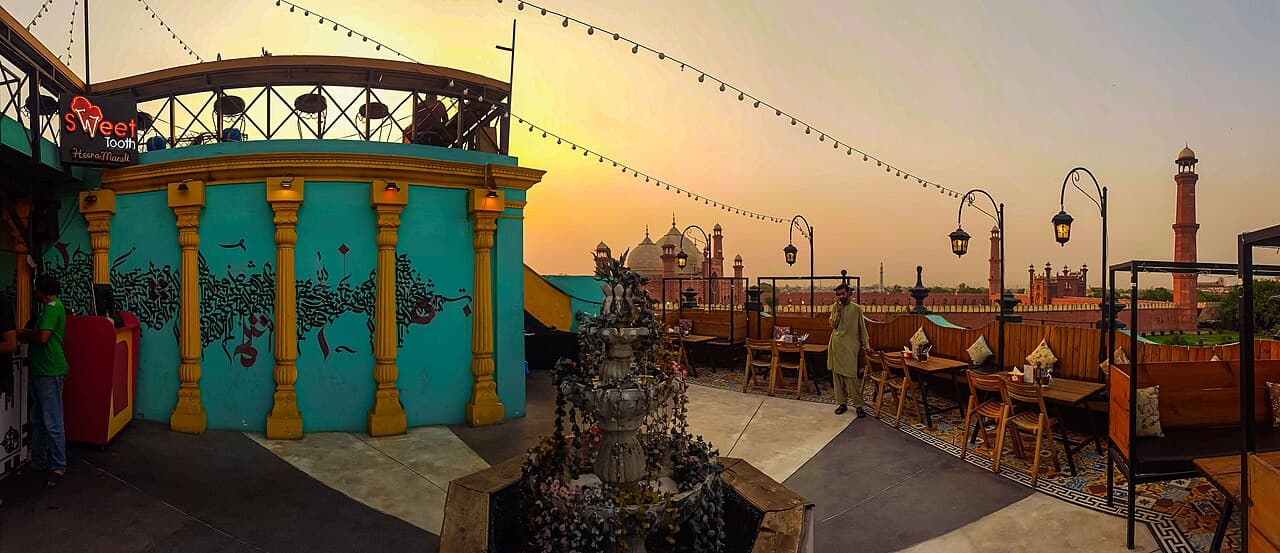
Badshahi Mosque, Lahore Fort, Wazir Khan Mosque, Shalimar Gardens — a deep dive into the Mughal masterpieces that define Lahore's skyline and soul.
Lahore was not merely a city in the Mughal Empire — for stretches of the 17th century, it was its capital. Six Mughal emperors used Lahore as their court city. The buildings they raised here were not administrative conveniences; they were statements of cosmic authority. To walk among them today is to feel the weight of that ambition in dressed sandstone and pietra dura inlay.
The Language of Mughal Architecture
Before walking the sites, it helps to understand the vocabulary. Mughal buildings speak in three primary tongues: red sandstone (the material of power, quarried from Rajasthan), white marble (the material of refinement, used at Taj Mahal and Shah Jahan's Lahore Fort additions), and kashi kari — the blue-and-white glazed tilework that Lahore's artisans elevated into a distinct regional art. Where Delhi uses marble, Lahore uses tile. This is the city's architectural fingerprint.
Lahore Fort (Shahi Qila): A Palace Within a Palace
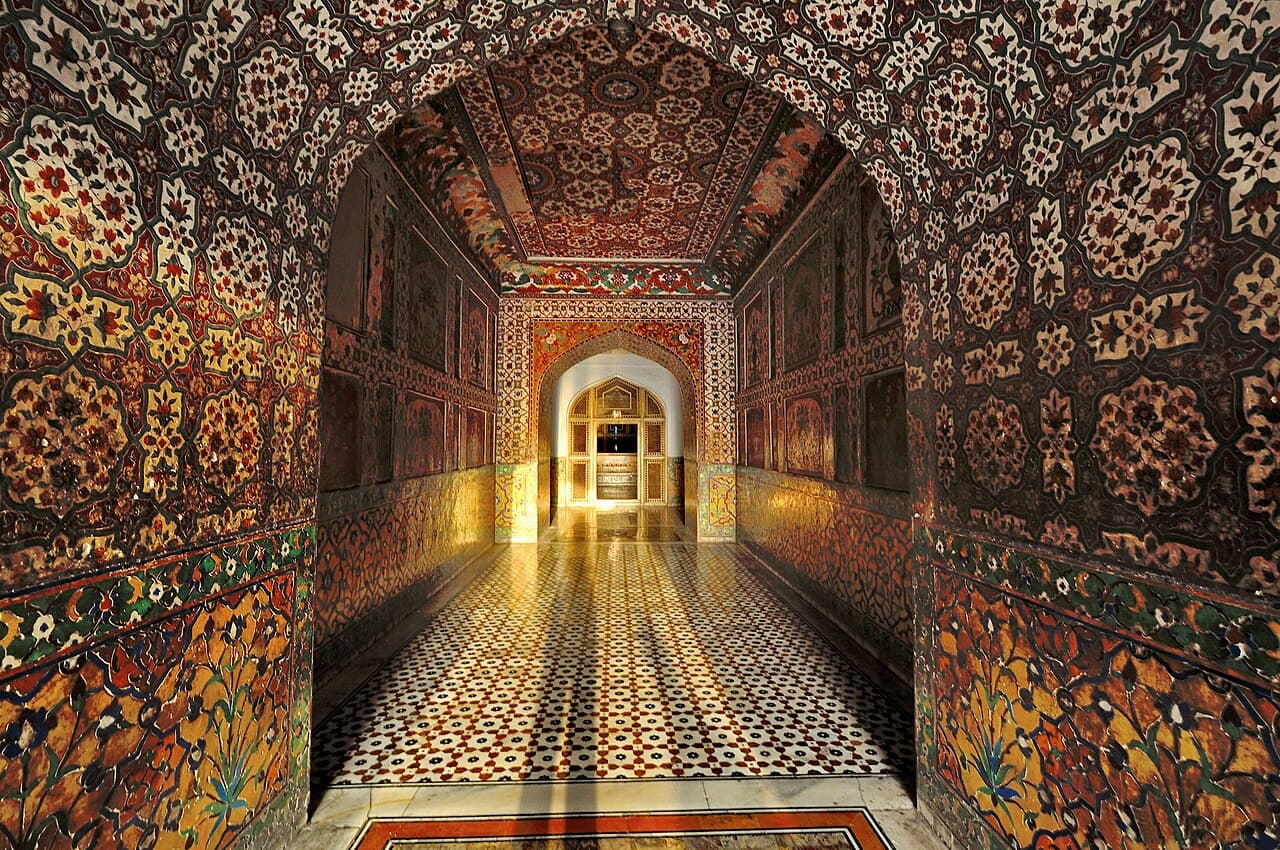
The fort is not one building but twenty-one, layered across four centuries of Mughal construction. Start at the Alamgiri Gate, added by Aurangzeb in 1673 and one of the most imposing entrances in South Asia. Move inward to the Sheesh Mahal — the Mirror Palace — where Shah Jahan's craftsmen covered every interior surface with convex glass inlay so that a single candle flame multiplies into a galaxy. The effect remains astonishing. Then find the Naulakha Pavilion, a small white marble kiosk whose pietra dura decoration — flowers, birds, and geometric patterns cut from semi-precious stones — took nine craftsmen nine years to complete. The name means "worth nine lakhs." It was probably an underestimate.
Badshahi Mosque: Scale as Theology
Built by Aurangzeb in 1673, the Badshahi Mosque held the record as the world's largest mosque for over three centuries. Stand in the courtyard and the scale stops being a statistic and becomes an experience: the courtyard alone accommodates 100,000 worshippers; the four minarets are 176 feet tall; the three marble domes shimmer white against whatever sky Lahore is offering that day. The interior is decorated in frescoed stucco — intricate floral patterns in ochre, red, and white. Come for Friday prayers if you want to see the space as Aurangzeb intended: full, thundering with collective devotion.
Wazir Khan Mosque: The Masterpiece of Kashi Kari
Inside the Walled City, a five-minute walk from Delhi Gate, stands what many architectural historians consider the most beautiful building in Lahore. The Wazir Khan Mosque was completed in 1641 under Shah Jahan's viceroy, Wazir Khan. Its facades are entirely sheathed in kashi kari tilework — blues ranging from turquoise to cobalt, punctuated by patterns in yellow, white, and manganese black. The calligraphy panels, containing Quranic verses in a script so fluid it reads like music, were executed by master calligraphers brought from Persia. No photograph has ever done it justice. You must stand before it.
Shalimar Gardens: The Geometry of Paradise
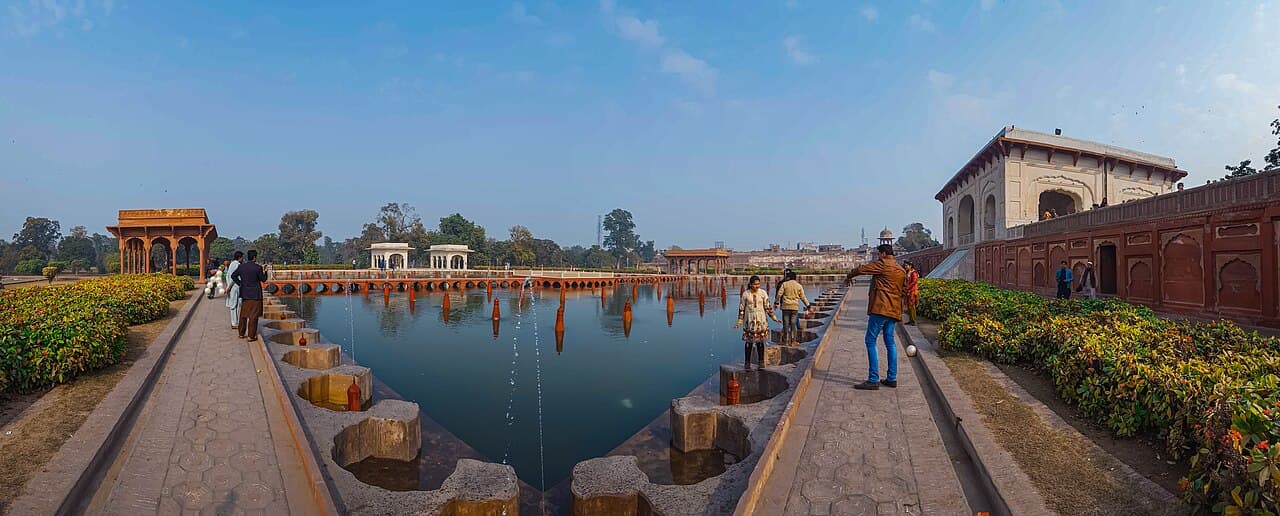
In the Quran, paradise is described as a garden with flowing water. The Mughals built paradise literally. Shah Jahan commissioned the Shalimar Gardens in 1641 — a three-terraced formal garden fed by a canal from the Ravi River, with 410 fountains operating simultaneously at full pressure. Today the fountains run on weekends only, but even in stillness the design conveys its logic: the world ordered, water controlled, geometry made beautiful. Walk the terraces from the public lower level up to the enclosed royal enclosure and feel the sequence of compression and release that the designers intended.
How to Visit
All four sites cluster in northern Lahore. A single day covers all of them if you start early. The Lahore Fort and Badshahi Mosque share a forecourt — visit both together in the morning when the light is on the mosque's marble. Walk to Wazir Khan through the Walled City lanes before noon, when the tilework is lit from the east. Save Shalimar for late afternoon, when the long shadows across the garden's symmetry are most dramatic. Entry fees are nominal. Guides hired at the fort gate add genuine depth. A camera with a wide lens is not optional.
Story
Heritage
Reading time
10 min
Legacy editorial
First published 18 February 2025
Verify changing facts and prices independently.
More scenes from the destination
General destination planning
Check current details before you go
These official links are general planning resources, not evidence for this article. Opening hours, fares, prices, access rules and businesses can change, so confirm details independently for your dates.
About the Author
Taqi Naqvi
AI entrepreneur and the founder of Top 10 Lahore. Building AI-powered content and research tools across South Asia.
Connect on LinkedIn