Walking the Walled City: A Self-Guided Heritage Tour
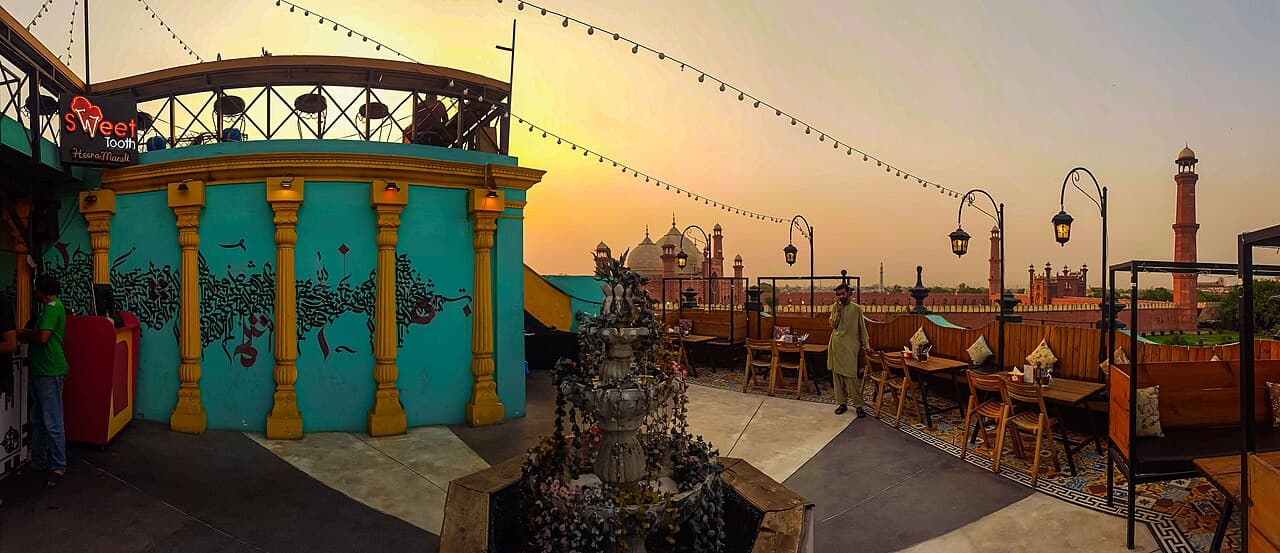
Delhi Gate to Roshnai Gate on foot — a step-by-step walk through Lahore's Walled City covering Shahi Hammam, Wazir Khan Mosque, Fakir Khana Museum, and the streets that built an empire.
The Walled City of Lahore is approximately 2.5 square kilometres. It was built, rebuilt, fortified, looted, restored, and continuously inhabited across a span of nearly a thousand years. Inside it, the oldest mosque in South Asia stands forty metres from a Victorian-era municipal building, which stands forty metres from a lane that has sold the same spices since the Mughal period. No other area in Pakistan packs this density of architectural and cultural history into walkable space. This guide takes you through it on foot, from east to west, in approximately three to four hours.
Practical Notes Before You Start
The best time to walk the Walled City is early morning, between 7 and 9 am, when the lanes are cool, the light is low and golden, and the crowds have not yet built. Alternatively, late afternoon after 4 pm offers softer light and a more atmospheric pace as the bazaars wind down for evening prayers. Avoid Friday midday when Wazir Khan fills for Jumu'ah. Wear comfortable shoes — the old stone lanes are uneven and narrow. Entry to Wazir Khan Mosque is free; Shahi Hammam charges Rs 50 for adults; Fakir Khana Museum requires a booking or a persuasive conversation at the door. Bring cash in small notes.
Start: Delhi Gate
Delhi Gate is the eastern entry point of the Walled City and your starting marker. The gate itself — a sandstone arch rebuilt in the Mughal style during colonial-era restoration — is less impressive than what lies beyond it, but it functions as a useful psychological threshold. You are passing from the noise of modern Lahore into a space that was already ancient when the British arrived. Stand at the gate for a moment and note the axis of the main lane (Shahi Guzargah, the Royal Road) stretching westward. Everything on this walk follows roughly that axis.
Stop 1: Wazir Khan Mosque (10–20 minutes)
Walk west from Delhi Gate for approximately five minutes and you will find the entrance to Wazir Khan Mosque on your right. Built in 1641 under Shah Jahan's governor Nawab Wazir Khan, it is the finest example of Mughal kashi kari tilework in existence. The facade is entirely surfaced in glazed tiles — deep cobalt, turquoise, ochre, and white — arranged in geometric and floral patterns of extraordinary intricacy. The calligraphy panels in the spandrels contain Quranic verses executed by Persian master calligraphers whose names are not recorded but whose skill is. Step inside the courtyard and look back at the iwan (entrance arch): the tile programme continues across every surface, including the minarets, which are sheathed in spiral tilework that unscrews toward the sky. Open daily. Free entry. No shoes beyond the courtyard gate.
Stop 2: Shahi Hammam (15 minutes)
Immediately adjacent to Wazir Khan, through a narrow doorway on the lane's north side, is the Shahi Hammam — the Royal Bathhouse, built in 1635 by Wazir Khan himself as a public bath serving the mosque's worshippers. It is one of the best-preserved Mughal hammams in the subcontinent. The Aga Khan Trust for Culture completed a meticulous restoration in 2015, and the interior — its domed chambers, the underfloor heating channels, the fresco remnants visible on the plaster walls — now reads clearly as a functioning space rather than a ruin. The ground plan alone, with its sequence of cool room, warm room, and hot room, explains the social logic of Mughal public life. Entry: Rs 50. Timings: 9 am – 5 pm daily except Monday.
Stop 3: Fakir Khana Museum (20–30 minutes)
Continue west on Shahi Guzargah and ask for Mohallah Fakir Khana — locals will know it. This is the ancestral home and private museum of the Fakir family, one of Lahore's oldest and most storied dynasties (the Fakirs served as ministers to Maharaja Ranjit Singh in the Sikh court). The house itself, a multi-storey haveli of the late 18th century, is extraordinary: courtyards stacked on courtyards, wooden lattice screens filtering the light, walls hung with miniature paintings, Mughal armour, jade vessels, rare manuscripts, and painted portraits of the Sikh court. The collection is not formally curated in the museum-science sense, but its density and authenticity are more compelling for that. Visits are by appointment or at the discretion of the family. Knock and ask politely — they are often accommodating to serious visitors. Suggested donation: Rs 500.
Stop 4: Walled City Lanes and Bazaars
Allow yourself to deviate. The Walled City's commercial spine includes Kashmiri Bazaar (fabrics and wedding textiles), Akbari Mandi (spices, dried fruit, wholesale goods of bewildering variety), and the narrow lanes around Rang Mahal where traditional copper-smiths and kite-makers still operate in the same workshops their predecessors used. The kite-making galis near Bhati Gate produce the flying kites, fighter kites, and decorative kites that Basant season demands — watching the process of bamboo-frame construction and tissue-paper covering is a small, precise pleasure. Do not buy anything you cannot carry easily; the lanes ahead are narrow.
Stop 5: Roshnai Gate (End Point)
The walk concludes at Roshnai Gate on the western end of the Walled City, which opens directly onto the forecourt shared by Lahore Fort and Badshahi Mosque. The gate's name means "gate of light" — in the Mughal period, it was illuminated by hundreds of lamps on festival nights, visible from the fort's ramparts across the moat. It is still the most dramatic exit the Walled City offers: you pass through the arch and suddenly the Badshahi Mosque's courtyard is before you, and the Fort's Alamgiri Gate is to your left, and the scale of the city's Mughal ambition becomes unmistakable. If you have energy and daylight remaining, the Fort is five minutes walk. If not, the chai dhabas clustered around Hazuri Bagh provide a perfectly adequate place to sit and process what you have seen.
Morning vs Evening: Which to Choose
Morning gives you cooler temperatures, golden light on the tile facades, and the Walled City before it reaches peak chaos. The mosque is most beautiful when the early sun catches the eastern facade at an oblique angle — roughly 8–9 am in summer, 9–10 am in winter. Evening gives you the bazaars at their most active, the food vendors setting up for the dinner rush, and a different quality of light that turns the sandstone and terracotta into something almost amber. Both are correct answers. The wrong answer is arriving at noon in June.
Story
Heritage
Reading time
9 min
Legacy editorial
First published 14 April 2025
Verify changing facts and prices independently.
More scenes from the destination
General destination planning
Check current details before you go
These official links are general planning resources, not evidence for this article. Opening hours, fares, prices, access rules and businesses can change, so confirm details independently for your dates.
About the Author
Taqi Naqvi
AI entrepreneur and the founder of Top 10 Lahore. Building AI-powered content and research tools across South Asia.
Connect on LinkedIn