Connect this guide with the rest of your visit in the Lahore trip planner. Read how the research is made and what its sources establish.
At a glance
Start here
- Give each child one evidence-hunting job rather than delivering a long lecture.
- Use two museum galleries, one public-memory question and one garden-system question.
- Choose two of the three locations when transfers would overwhelm the learning.
- Stop while children can still describe what they noticed.
01
Give everyone a role
Before leaving, assign rotating roles: shape finder, material detective, map keeper and question collector. The adult's job is not to supply every answer. It is to turn claims into evidence: Which label tells us that? What detail in the object supports the story? What changed when we moved from an indoor case to a public monument?
Prepare three blank cards per child or use a notes app. Each card records one object or place, one observed detail and one unanswered question. This produces a family archive without forcing photographs of every room. Keep personal information out of anything children might post publicly.
02
Museum hunt one: bodies that tell stories
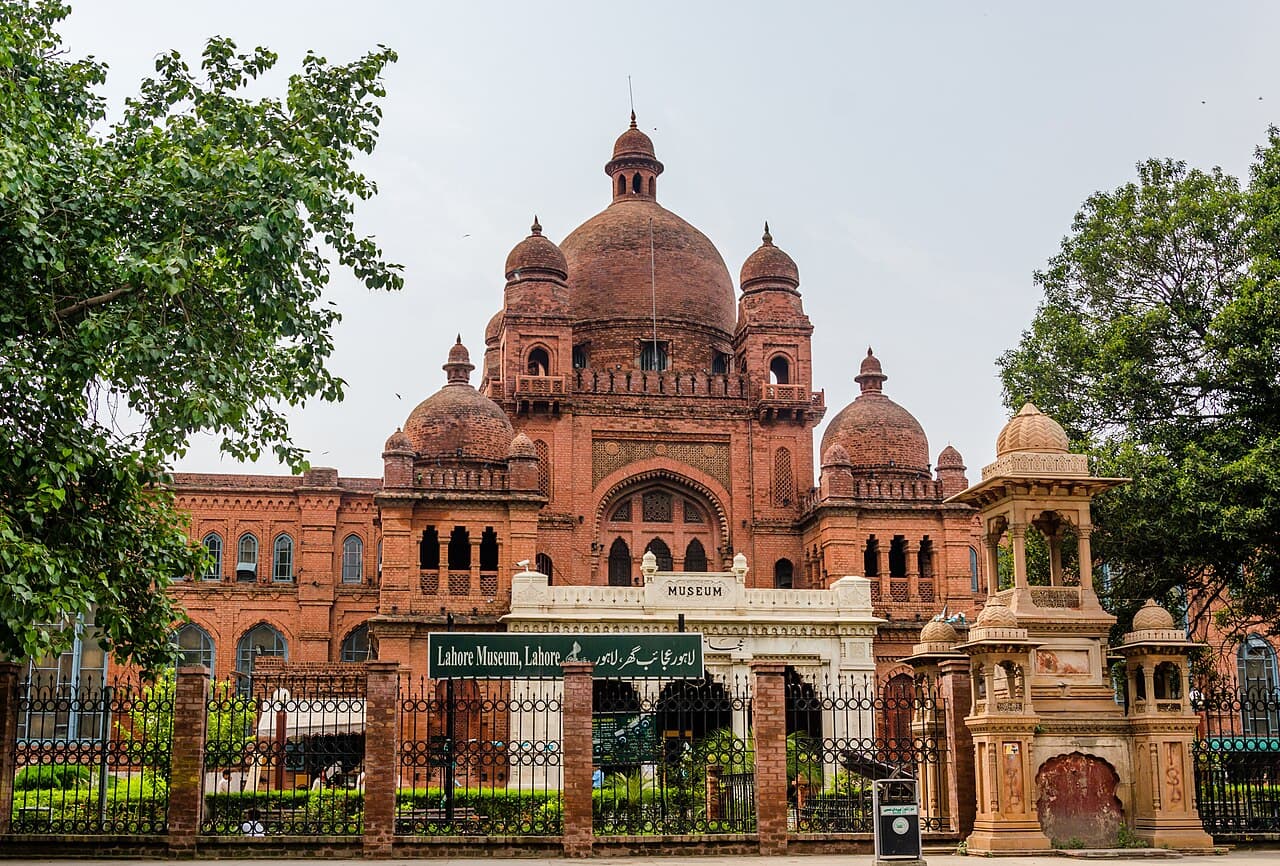
Begin in the Gandhara Gallery if it is available. Lahore Museum says the room includes friezes, panels and sculptures narrating episodes from the life of the Buddha, along with architectural fragments, stucco and terracotta. Its highlights include the Fasting Buddha and a reconstructed stupa assembled from pieces found at Sikri near Jamal Garhi.
Ask younger children to find three kinds of line: a clothing fold, a rib or muscle, and an architectural border. Older children can compare a single figure with a crowded narrative panel. Do not ask them to decide which is more realistic; ask what each artist needed the viewer to understand first.
Sources: Lahore Museum, Government of Punjab03
Museum hunt two: money as a message
Move to the Coins Gallery for a radically smaller object scale. The collection represents many ruling traditions and includes punch-marked coins, Lahore-linked issues and illustrated zodiac coins associated with Jahangir. A coin works well with children because it invites concrete comparison before historical explanation.
Find a portrait, an animal or symbol, and two scripts. Ask why durable metal carried names and images across places. Then invent no translations: use the museum label for identification and leave uncertain marks as questions. Ten carefully compared coins are enough; the official collection contains tens of thousands, and completion is not the goal.
Sources: Lahore Museum, Government of Punjab04
Public-memory stop: why build here?
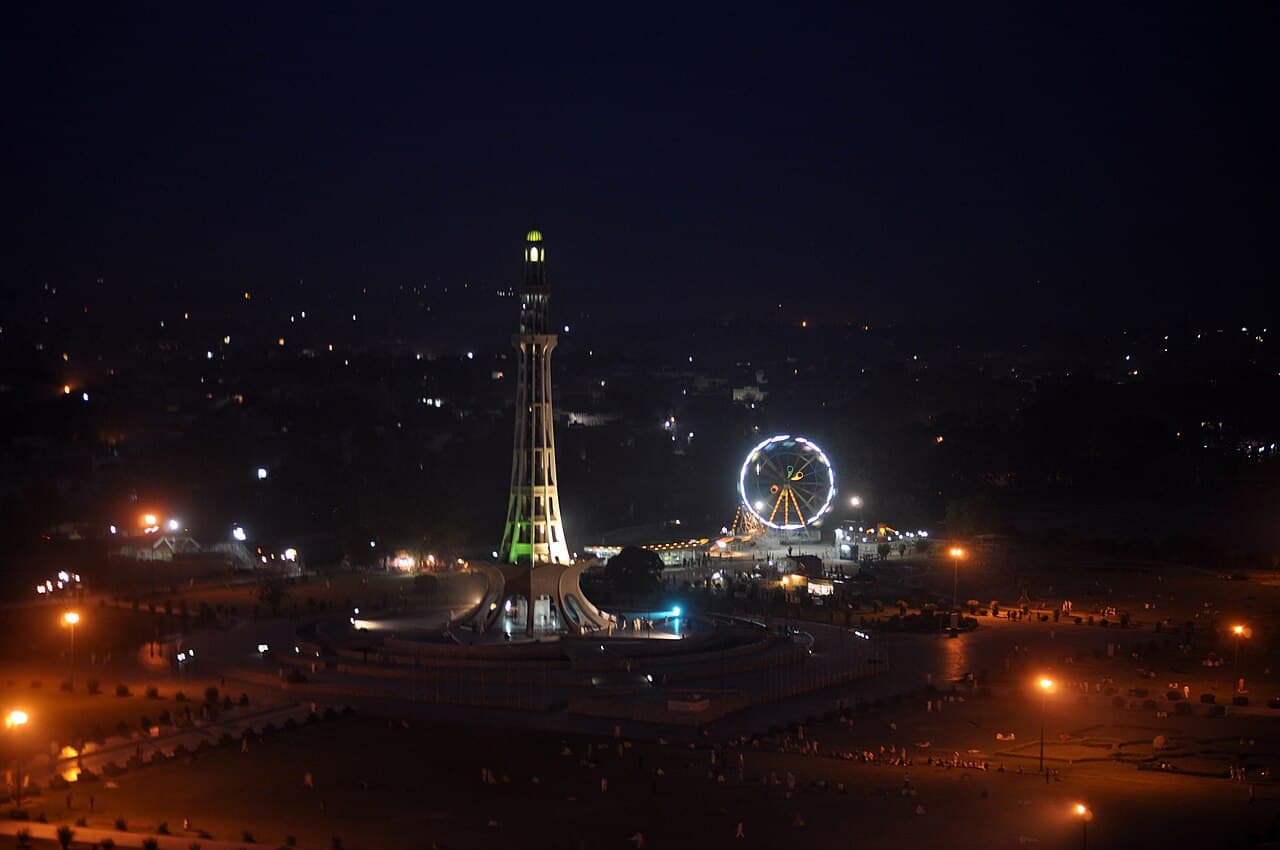
At Minar-e-Pakistan, keep the question spatial. WCLA's Greater Lahore monuments page identifies the monument as marking the place where the Lahore Resolution was passed on 23 March 1940 and says the minaret was completed in 1968. The family task is to distinguish event, site and later memorial: the resolution happened first; the monument later made that location visible.
Do not promise access inside or up the structure. From whatever lawful public area is confirmed available, compare the vertical monument with the open park around it. Ask what can be understood from a distance and what requires a plaque, photograph or museum gallery. This is a public-memory exercise, not a substitute for the existing Badshahi Mosque or Lahore Fort guides.
Sources: Walled City of Lahore Authority05
Garden stop: turn Shalamar into a water puzzle
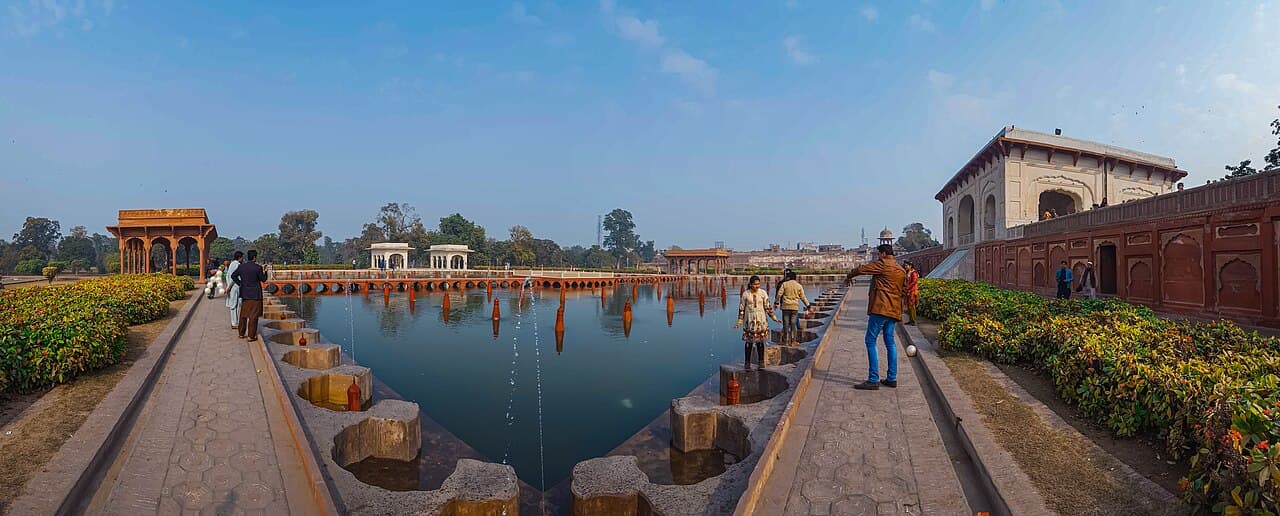
Shalamar Gardens offers a systems question: how could water organise space before electric pumps defined modern expectations? TDCP's official brochure describes three descending terraces, a canal called Shah Nahar, tanks, cascades, fountains and pavilions. It names the upper Farah Bakhsh, middle Faiz Bakhsh and lower Hayat Bakhsh terraces and associates them with different planting and court functions.
Ask children to predict the direction of flow, then compare the prediction with visible channels and level changes. Count repeated units such as fountain points, niches or paired pavilions only where they can be seen without crossing barriers. The federal archaeology record describes the garden as a royal recreation and accommodation landscape, so discuss who the design originally served as well as how it is encountered now.
Sources: Tourism Development Corporation of Punjab; Department of Archaeology and Museums, Government of Pakistan06
Most families should choose two sites
Use a simple pairing rule. Museum plus Minar works for objects and national memory. Museum plus Shalamar works for objects and designed landscape. Minar plus Shalamar creates a fully outdoor day and should only be chosen after checking live weather, air information and current site operations. The strongest pairing is the one that preserves attention after the transfer.
Add a meal and rest according to your family's established needs, not a generic timetable. Bring water and required personal supplies, but verify what each venue allows. If a child is finished after one investigation, record the three cards and leave; curiosity survives better when the last memory is success rather than exhaustion.
- Short version: two museum galleries only.
- Balanced version: museum plus one outdoor landscape.
- Return version: keep the third location for another day and reuse the same evidence cards.
07
End with a three-object mini exhibition
At home or back at the hotel, each person chooses one card and gives it a title. Arrange the cards in an order: smallest to largest, oldest to newest, private object to public monument, or mystery to answer. The order itself makes an argument and mirrors a curator's work without pretending the family knows every context.
Include uncertainty. A good caption can say what was observed, what the official page or label identified, and what remains unclear. Avoid uploading identifiable images of other visitors or presenting restricted interiors as freely accessible. The finished mini exhibition is modest proof that the day produced looking, comparison and questions rather than a blur of locations.
Useful answers
Reader questions
What age is this Lahore heritage plan for?
There is no fixed age. The role system scales from shape-finding to reading labels and comparing political messages. Adults should choose tasks, duration and environments that fit the specific children with them.
Sources:Which two Lahore Museum galleries work best with children?
Gandhara and Coins create a useful contrast between large narrative sculpture and tiny portable objects. Confirm both galleries are available and substitute from the museum's official directory if needed.
Sources: Lahore Museum, Government of Punjab; Lahore Museum, Government of Punjab; Lahore Museum, Government of PunjabDoes the Minar stop include climbing or interior access?
No access is promised. The activity works from a lawful public viewpoint by separating the 1940 event from the later monument that marks its location. Check the responsible authority for current access information.
Sources: Walled City of Lahore AuthorityCan we do all three locations in one day?
It may be physically possible, but the guide recommends choosing two when transfers would reduce attention. The learning structure is more important than completing a circuit, and the third investigation works well as a return visit.
Sources:Read the evidence
Sources and further reading
These sources support the relevant sections above. Plans and comparisons are editorial suggestions. Check operators for current arrangements.
- Gallery | Lahore Museum ↗Lahore Museum, Government of Punjab · Research date 14 September 2026
The official selection of galleries available for substitution and family planning.
- Gandhara Gallery | Lahore Museum ↗Lahore Museum, Government of Punjab · Research date 14 September 2026
Narrative subjects, materials, named highlights and the reconstructed stupa in the Gandhara Gallery.
- Coins Gallery | Lahore Museum ↗Lahore Museum, Government of Punjab · Research date 14 September 2026
The collection's chronological range and named Lahore and Jahangir coin highlights.
- Explore Lahore's Historic Monuments in the Walled City ↗Walled City of Lahore Authority · Research date 14 September 2026
Minar-e-Pakistan's relationship to the Lahore Resolution site and its completion in 1968.
- Shalamar Gardens: A World Heritage Site ↗Tourism Development Corporation of Punjab · Research date 14 September 2026
The three terraces, water system, planting logic, pavilions and named garden spaces.
- Shalamar Garden ↗Department of Archaeology and Museums, Government of Pakistan · Research date 14 September 2026
The garden's royal recreation and accommodation purpose, terracing, pavilions and canals.